Challenges
The Ford Design System provided foundational UI components, but EV-specific workflows (remote setup, charging enrollment, grid services incentives) introduced interaction patterns and governance processes not yet standardized within the system.
This included:
Implementation of a newly refreshed Ford Design System while developing and submitting new patterns and components
Development of emerging EV-specific workflows not previously modeled
The need for cross-platform consistency (responsive web to mobile to in-vehicle)
Accessibility and regulatory considerations
Parallel digital product launches timed with the vehicle’s Job 1 launch
Alignment with regional utility companies and other automotive brands in the development of a grid services incentives program for EV owners
Goals
Support the launch of Ford’s new EV lineup through a human-centered end-to-end consumer journey
Increase confidence among EV shoppers and owners with tools and resources that address range anxiety (the distance one can travel between charges and the time needed to charge), tax incentives, home and away charging, service, and more.
Align all digital experiences with the new Ford Design System and accessibility standards
Improve customer engagement through vehicle settings customization during the wait time between reserving the vehicle and delivery
Standardize cross-product UX workflows and build alignment between product, design, and engineering to convey the feeling of confident and enthusiastic EV ownership through every touchpoint
My role
I led UX design and research efforts across several first-of-their-kind tools and services, helping Ford define what it means to own, charge, and interact with an electric vehicle, while aligning with new accessibility and design system standards. Most of these tools and services were developed in parallel, with Team Edison working side-by-side to rapidly ideate, test, and ship products timed with a Job 1 launch.
During these initiatives, I:
Developed research plans, conducted and synthesized user research across multiple products to elevate the consumer experience, including an in-vehicle usability study
Created user flows, wireframes, and interface designs across multiple platforms
Led stakeholder reviews, managed concurrent workstreams, and supported team growth
Integrated the Ford Design System and WCAG standards into all UX deliverables
Facilitated alignment across product, engineering, and executive stakeholders
Helped define the EV ownership experience and scalable service patterns
Supported a large-scale cultural shift toward human-centered design within an enterprise
Highlights from each initiative
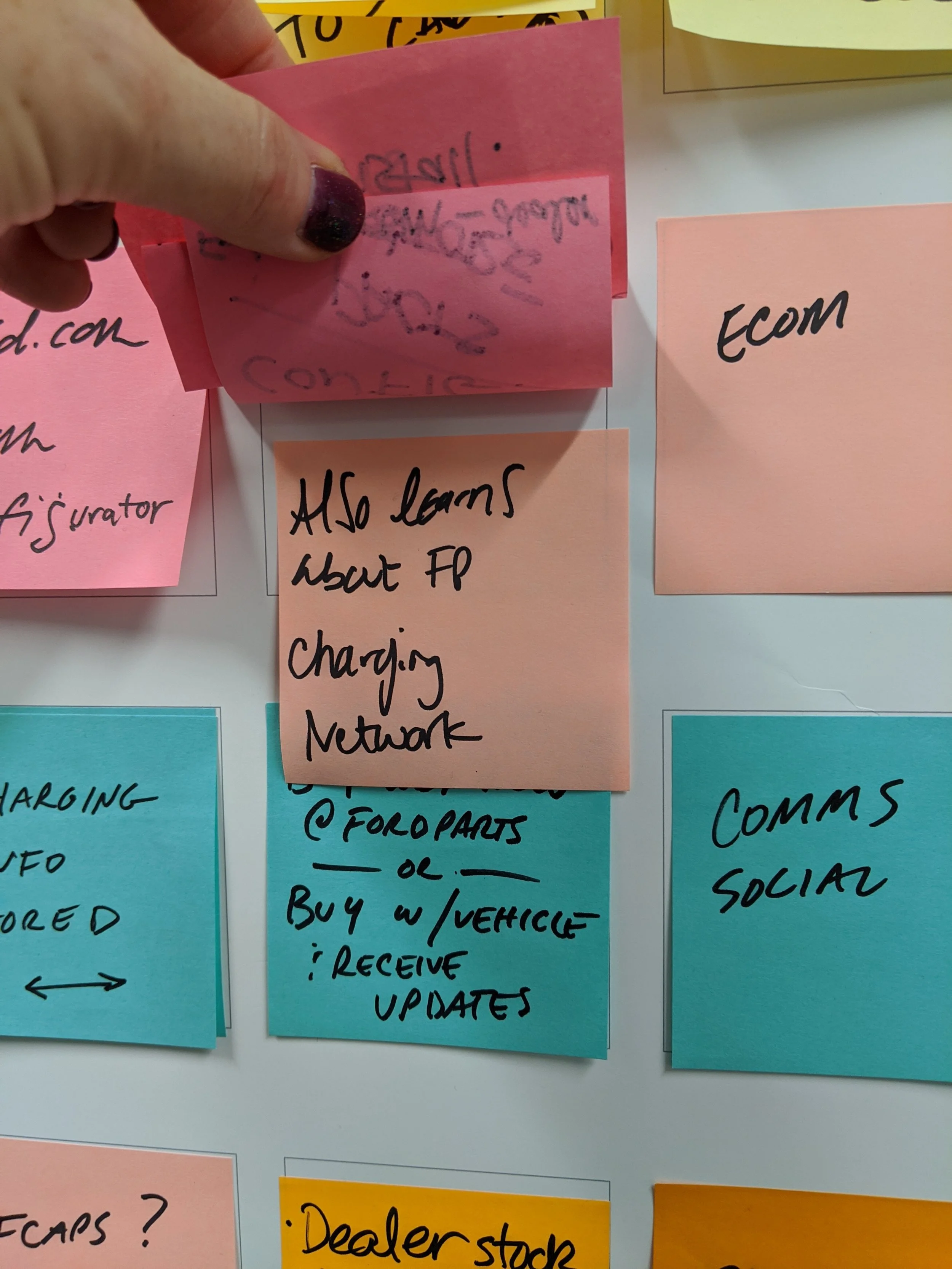
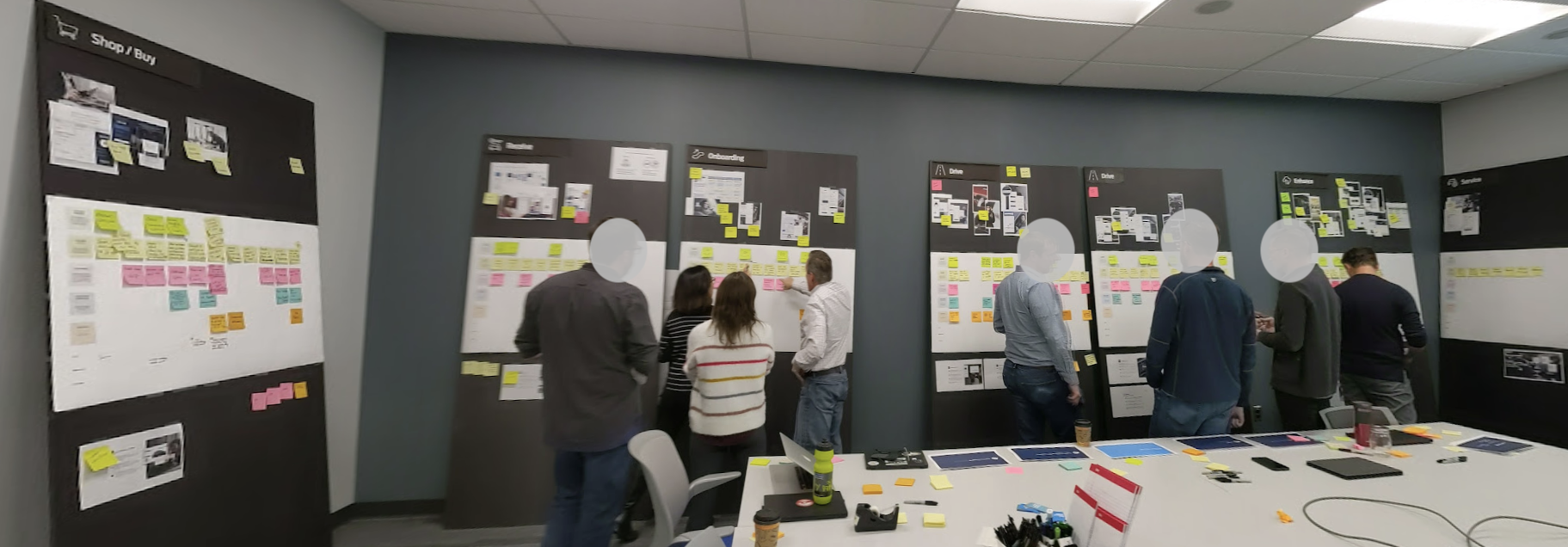
Our team mapped the full ownership journey for Battery Electric Vehicle (BEV) consumers, from the first shopping touchpoint to charging and servicing. This months-long effort allowed us to identify critical moments and gaps across business units and align our strategy for a more cohesive consumer experience.
End-to-End EV Consumer Journey
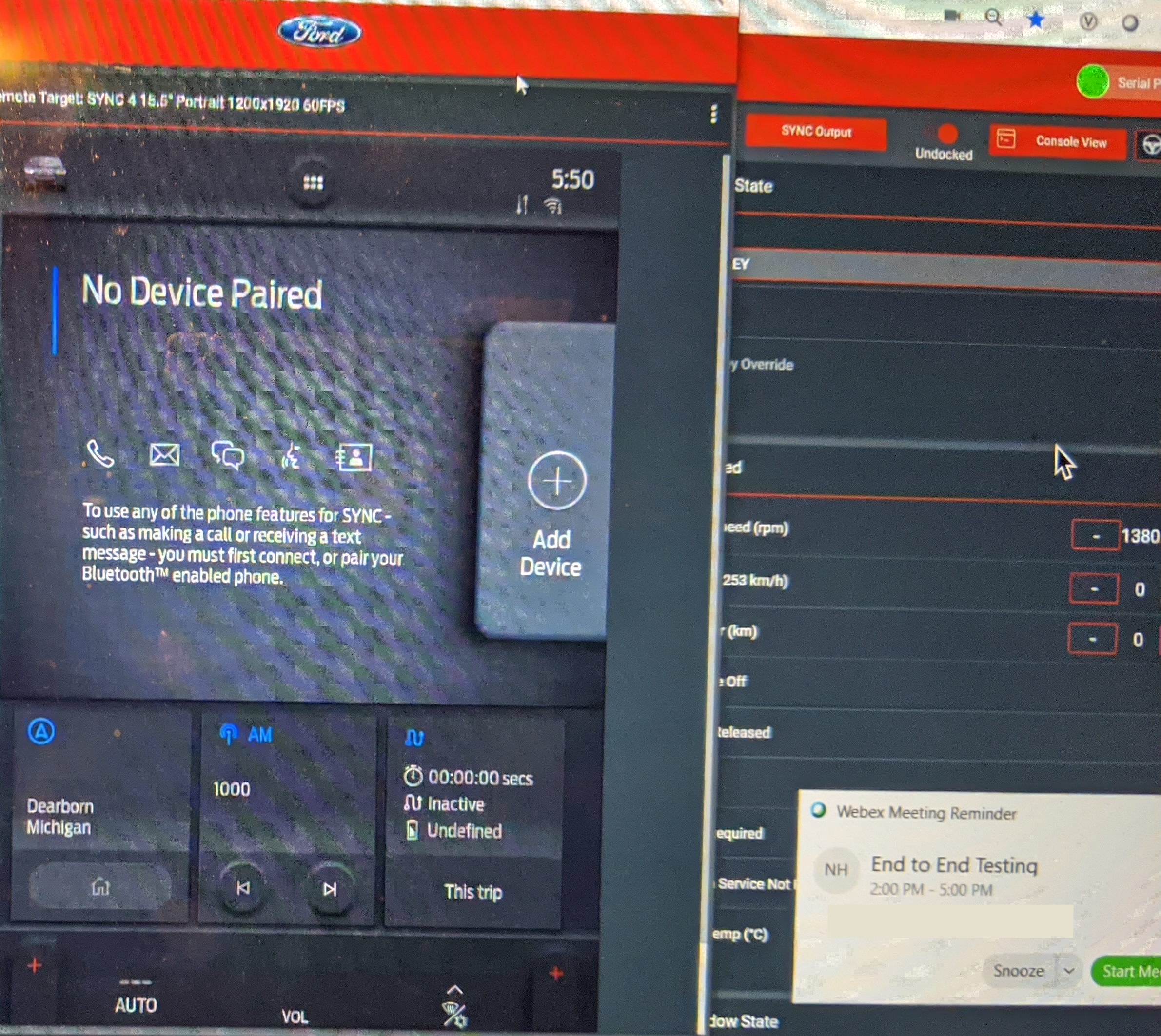
Remote Vehicle Setup User Testing
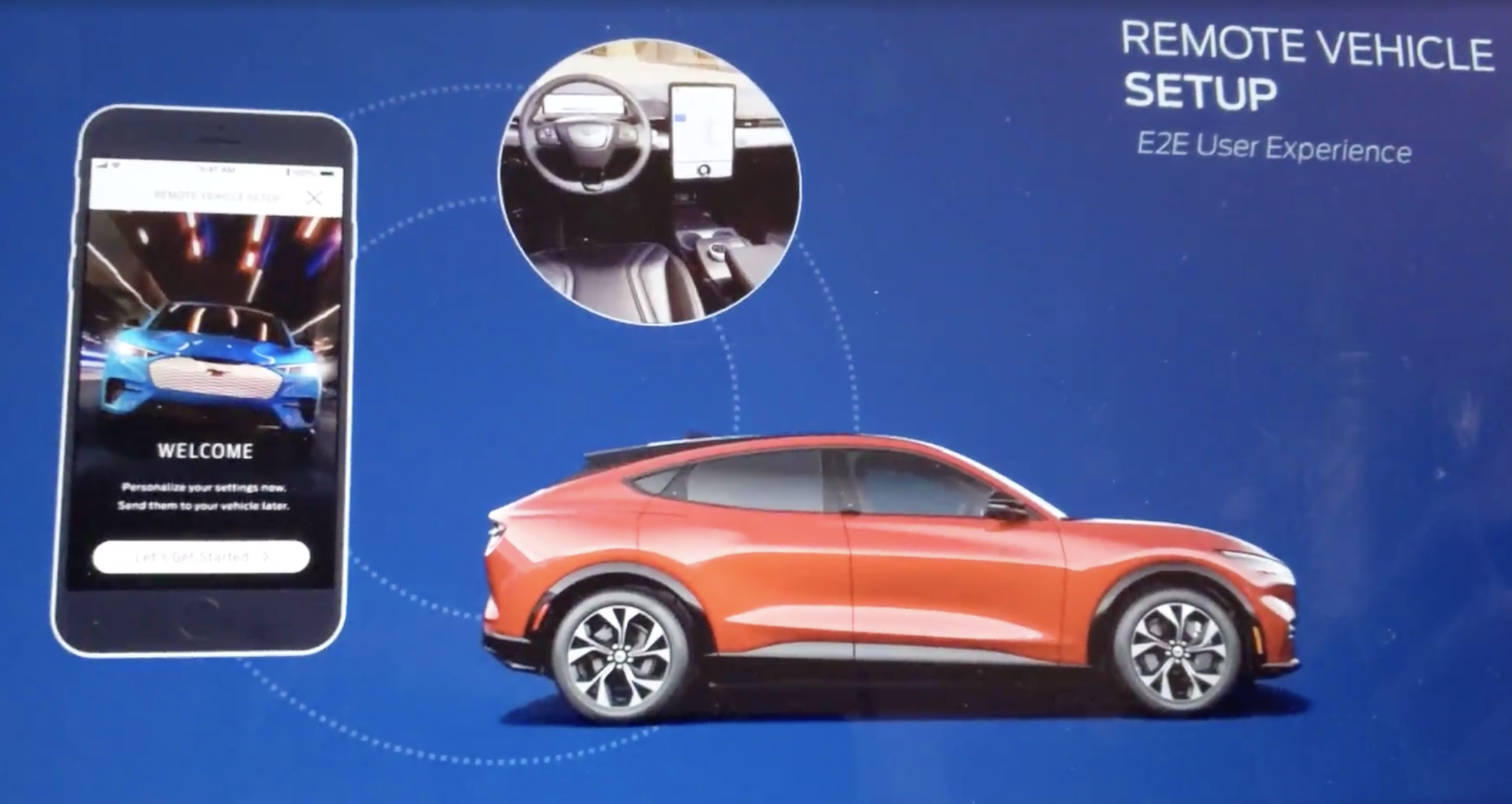
Remote Vehicle Setup is a mobile app experience that allows owners to learn about, customize, and configure key vehicle features ahead of receiving their vehicle. This enabled early engagement for eager Mach-E reservation holders during long wait periods.
When the owner took delivery of the vehicle, pairing their device synced the app with the in-vehicle settings, carrying over their preferences.
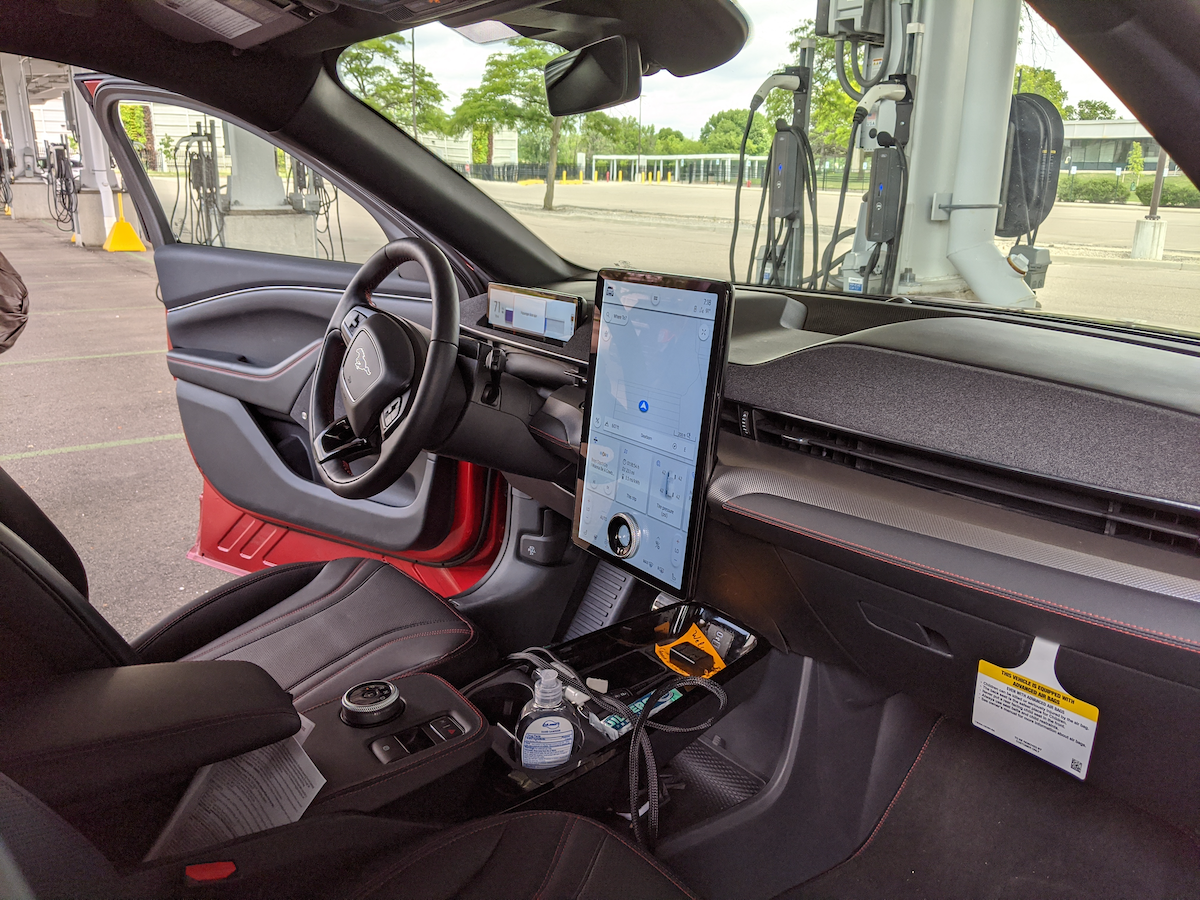
I oversaw in-vehicle user testing of this pairing to inform our team's work on creating a seamless experience.
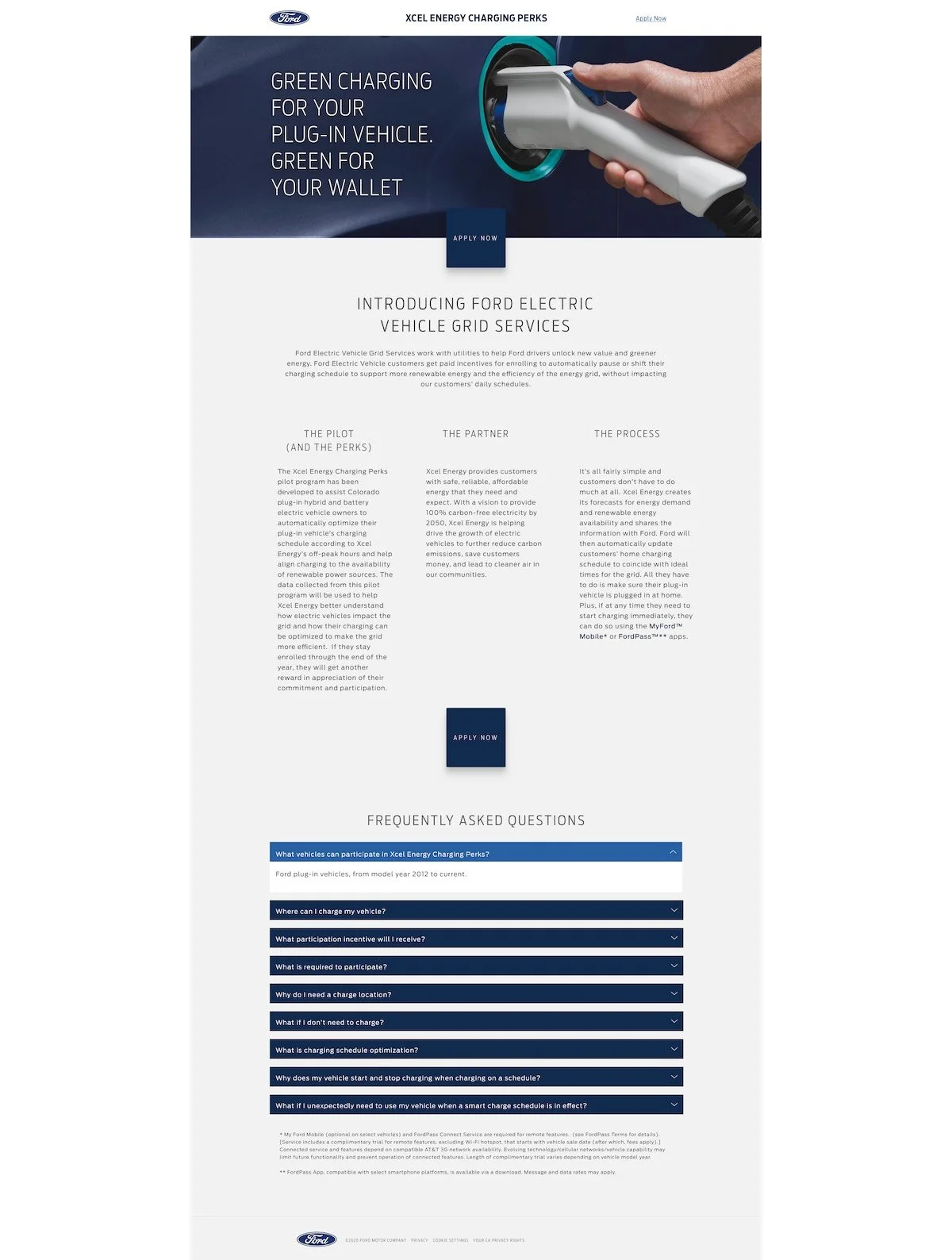
Vehicle Grid Services
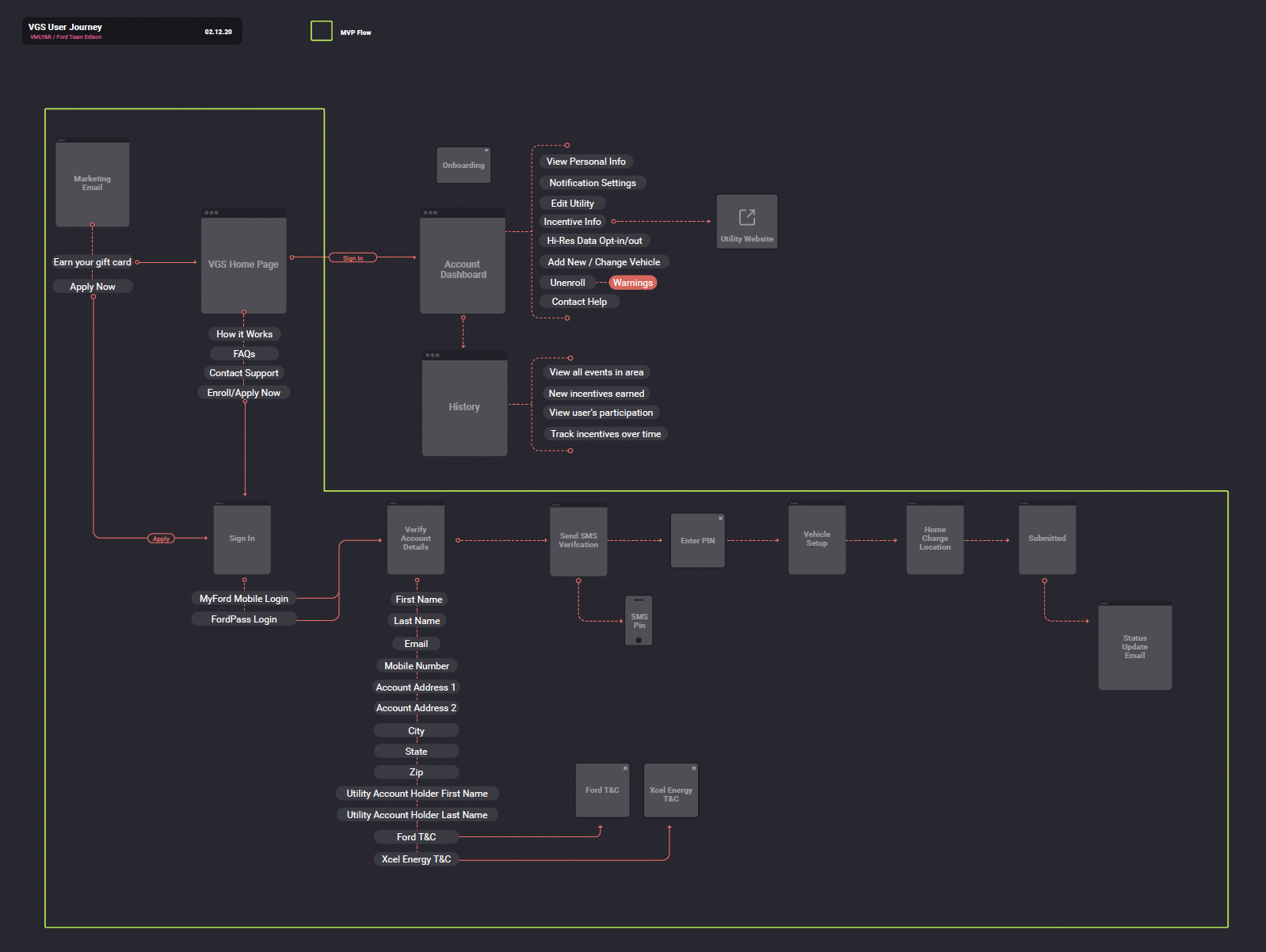
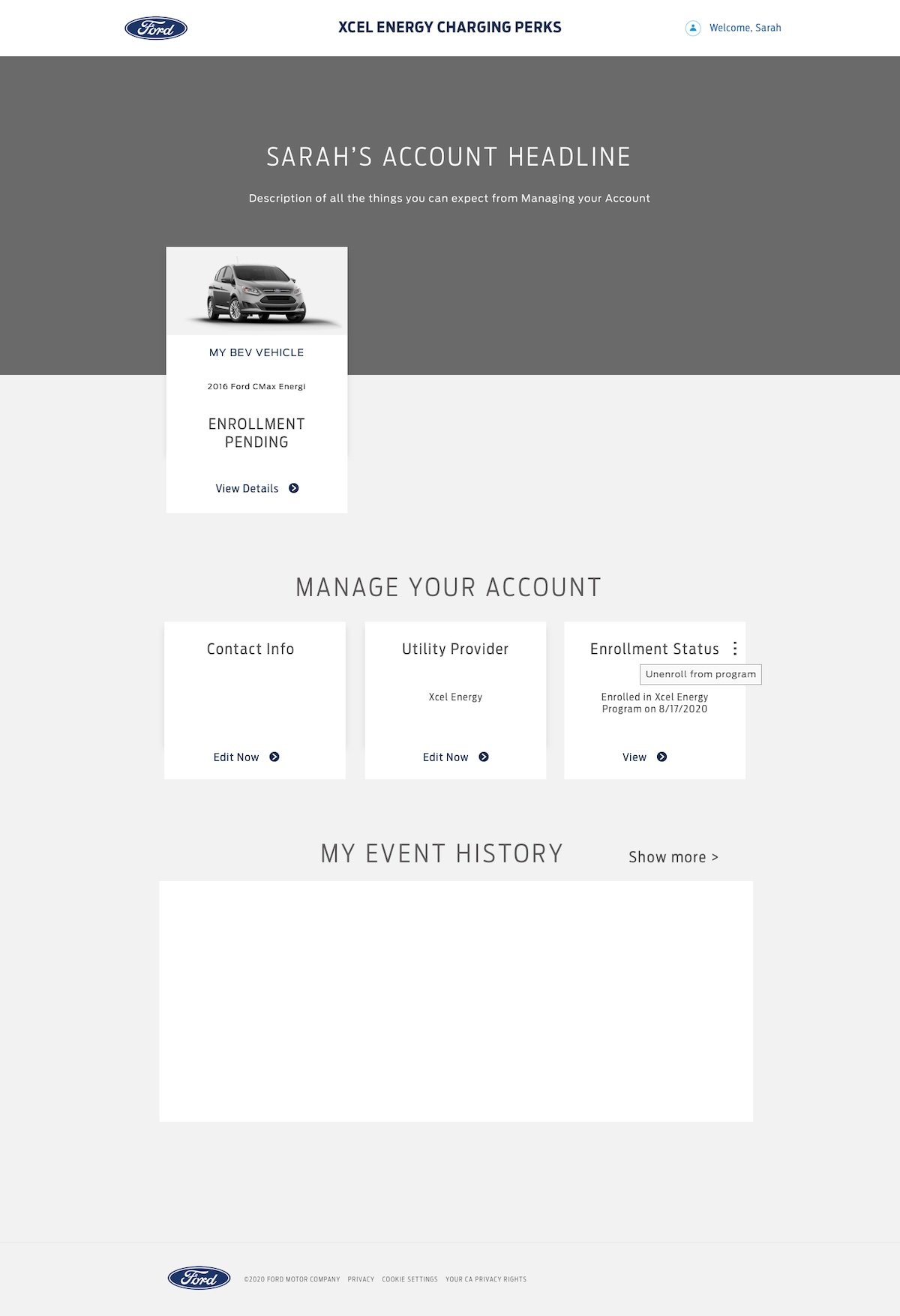
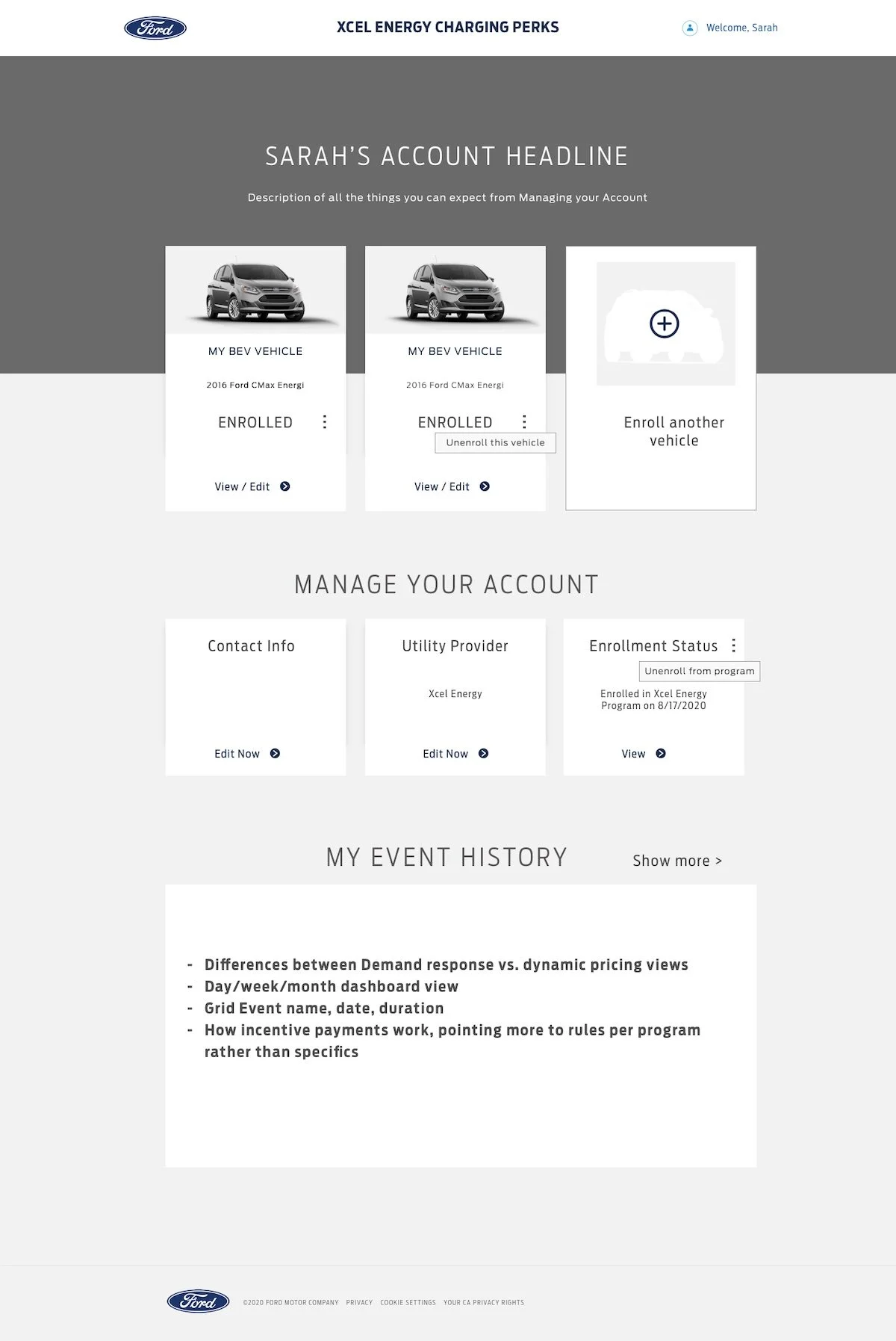
Vehicle Grid Services was a pilot energy-savings program that enabled EV owners to connect their vehicles to electric utilities to earn incentives.
In collaboration with program leadership, the product manager, copywriters, and engineering team, I led the UX design of this initiative. I developed flows and production-ready screens for the enrollment and account management experience.
Mustang Mach-E Cost of Ownership Calculator
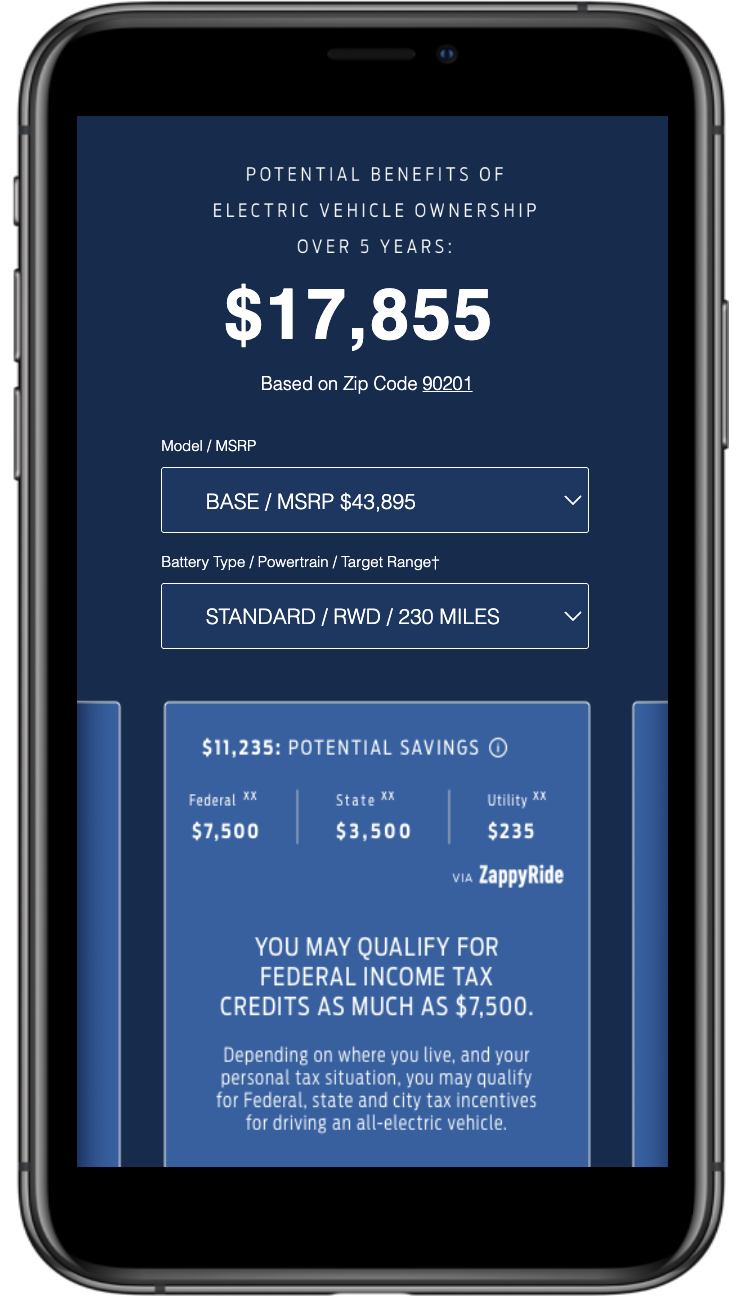
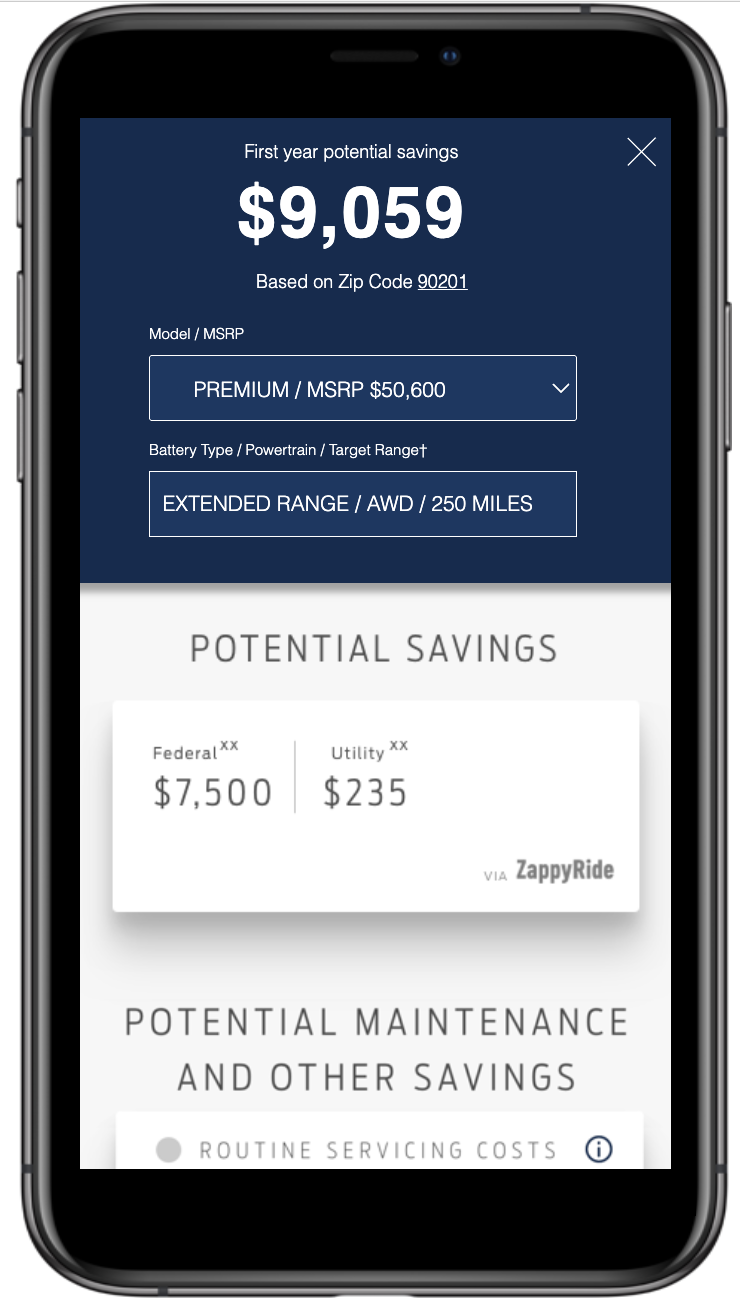
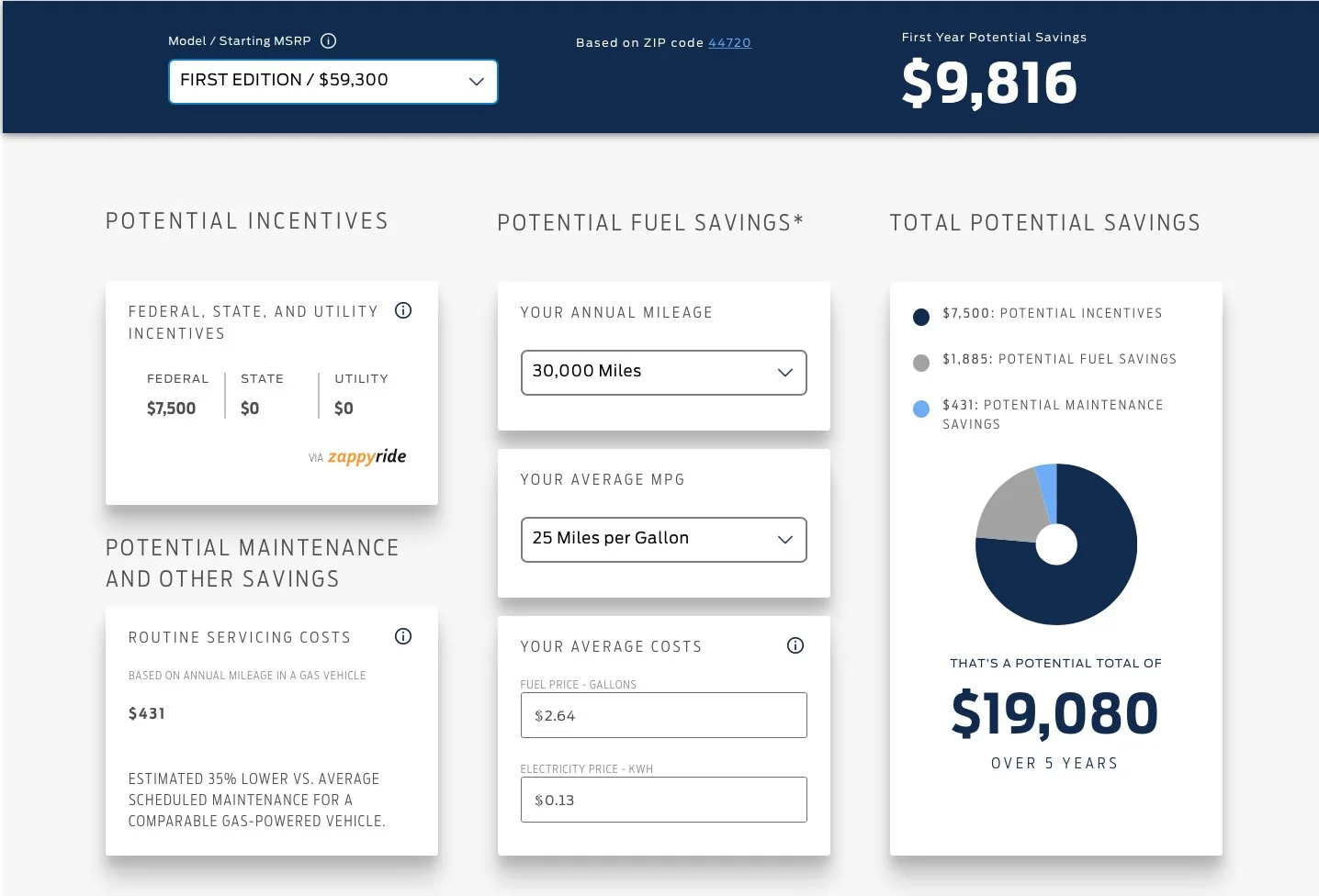
This was a collaboration with Zappyride, a data-driven insights company, to visualize cost comparisons across vehicle configurations and lifestyles. The goal was to help shoppers understand the true cost of EV ownership, including tax incentives and maintenance.
Located on the vehicle homepage, the interactive dashboard allowed users to select variables such as model, yearly mileage, and miles per gallon to calculate their projected savings for their first year of Mach-E ownership.
Process:
Working closely with the program manager to align on the business and consumer needs of this tool, I created a responsive layout that acted as both a calculator and a dashboard. It was important to emphasize the savings totals while making comparisons clear and consumable by shoppers seeking data to inform their decisions.
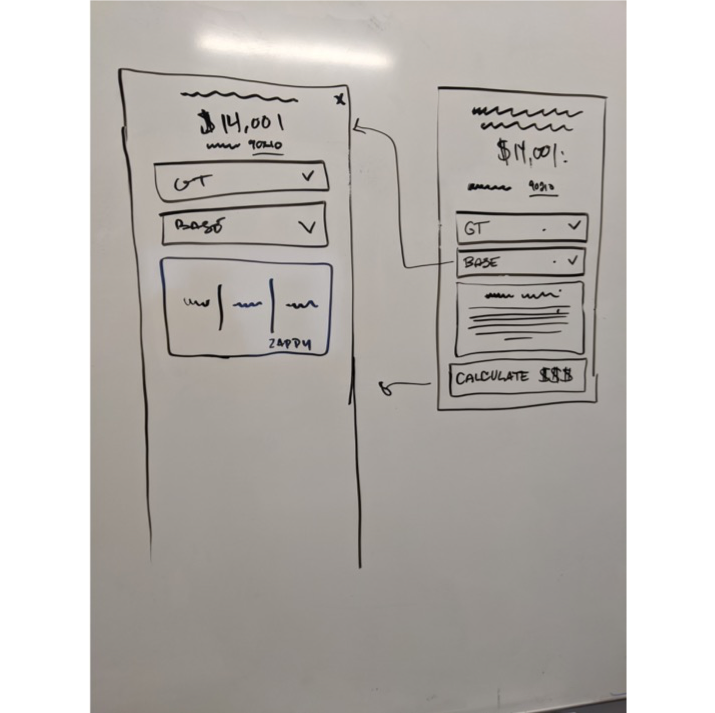
Starting in low-fidelity, I sketched options for early discussion and layout configuration.
Once key sections were decided upon, I created the design in high fidelity for web and mobile using Ford Design System components in Sketch.
To evaluate the calculator's usefulness and intuitiveness, I created an Axure prototype for a usability test on usertesting.com.
Using feedback from the usability test, I made improvements to the wording and the ordering of the sections.
The calculator launched on the vehicle homepage in a 4-week timeframe from start to finish.
E-Transit Vehicle Homepage
Developed a web experience to help small businesses and fleet owners understand the benefits of going electric, in alignment with newly-launched Ford Pro and company-wide sustainability goals.
Outcome
All five products launched successfully and are live or publicly available
Created more substantial alignment between product, design, and engineering teams
Contributed to Ford’s first wave of EV consumer-facing services
Established reusable accessibility and design system alignment processes
Helped define what “ownership experience” means in the age of electrification
Created a sign-up platform for the Grid Services pilot program, now known as Ford Energy Rewards
Reflection
I'm proud of the ways our team:
Used design thinking to unite siloed business units
Created meaningful consumer touchpoints across time and channels
Delivered practical, scalable tools that support Ford’s climate and consumer experience commitments
This work deepened my perspective on service design, design operations, and the role of UX leadership in large-scale transformation.